Stretch Mark Camouflage vs Microneedling
They both involve needles. That's about where the similarities end.
If you’ve been researching stretch mark treatments, you’ve probably seen both “microneedling” and “inkless revision” come up. They sound similar: both involve needles, both claim to improve stretch marks. But they are fundamentally different procedures, and the difference comes down to two things you can actually picture: coverage and depth.
The coverage problem with microneedling
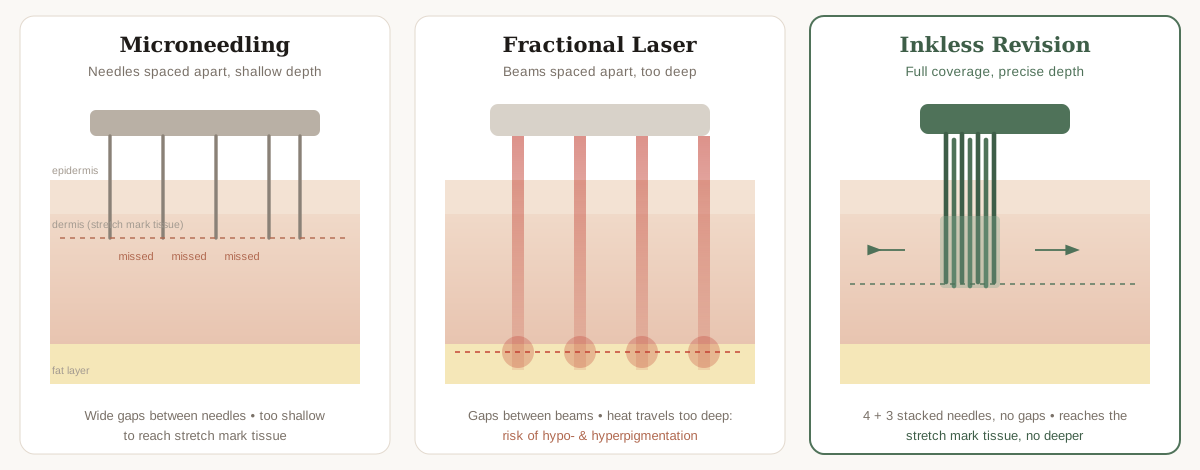
Cosmetic microneedling uses a derma pen or roller with needles arranged in a cartridge, and those needles are spaced apart. As the device passes over your skin, it punctures some points and skips the skin between them. For general rejuvenation (pore size, fine lines, overall glow) that sampling approach is fine, because the goal is a diffuse, mild collagen response.
A stretch mark is not diffuse. It is a specific band of torn tissue, and every millimeter of it needs to be reached. With spaced needles, large parts of each mark are simply missed on every pass.
Our inkless device uses a stacked configuration: four needles on top, three nested below, with essentially no space between them. Each pass treats a continuous line of tissue instead of scattered points. The practical result: a single inkless session delivers area coverage comparable to as many as ten microneedling sessions.
The depth problem
Microneedling typically works at shallow, uniform settings across broad skin. Stretch mark tissue lives deeper, in the dermis, and shallow passes stimulate the surface without reaching the tear itself. Inkless revision works at controlled, targeted depths inside the stretch mark tissue: deep enough to trigger repair where the damage actually is, and no deeper.
Serums: deposited, not applied
In microneedling, serums like hyaluronic acid are usually applied to the surface during or after treatment. In inkless revision, specialized healing serums are deposited directly into the deeper layers through the needles as the device works, feeding the repair process inside the mark rather than sitting on top of it.
Key differences at a glance
Coverage: microneedling needles are spaced apart and miss skin between punctures. Inkless uses a 4-plus-3 stacked needle configuration with no gaps, covering the whole mark.
Depth: microneedling is shallow and uniform. Inkless is adjusted per stretch mark to reach the damaged tissue precisely.
Targeting: microneedling treats a broad zone. Inkless traces each individual stretch mark.
Serum delivery: topical versus deposited into the tissue during the procedure.
Practitioner focus: microneedling is a general aesthetic service. Inkless stretch mark revision is the only treatment we perform.
Which gets better results for stretch marks?
For overall skin rejuvenation, microneedling is a reasonable choice. For stretch marks specifically, coverage and depth decide the outcome, and that is exactly where generic microneedling falls short. Many of our clients come to us after several microneedling sessions with little visible change in their marks. Those sessions were not wasted, since any collagen stimulation helps, but the difference once the full mark is treated at the right depth is what produces change you can actually see.
Can you combine both?
There is no harm in having done microneedling before coming to us. Just wait at least 4 to 6 weeks after your last microneedling session so your skin is fully healed. If you are deciding between the two for your stretch marks, book a free 15-minute video consultation: we will look at your marks and give you an honest recommendation, even if that recommendation is not us.
Ready to learn more?
Book a 15-minute consultation to discuss your specific situation. We’ll assess your skin, explain your options, and give you honest guidance.
Book a Free Consultation →